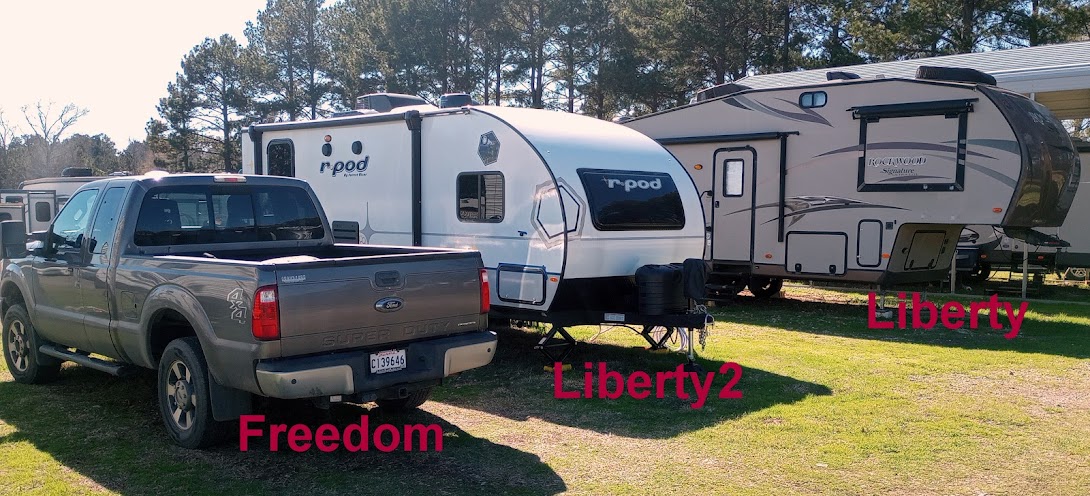
Friday, February 12, 2016

Old Style Mardi Gras

Location: Grand Isle State Park (El. 5 feet); Grand Isle, Louisiana

All pictures taken with Nokia Lumia Icon 929 Cell Phone
(click pictures to enlarge)

As you can see from the location, I've moved. However, I'm still playing catch up with the blog. It's Friday morning and posting about last Tuesday and Wednesday. Oh well, here goes.
My new campground at
Grand Isle State Park

My campsite. Nice, relaxing


Last Tuesday was "Fat Tuesday" which is also called Mardi Gras. I've been to the fancy ones with parades, marching bands, beads and throws. I was looking for more of a traditional, old fashioned Mardi Gras and found it in a little town called Iota, Louisiana.
There were lots of crawfish ponds on the way to Iota. The red dots are the traps. The market for crawfish seems to grow each year as more and more people get turned on to them.

The boats used to check the crawfish traps. Notice the large wheel in the back rolls on the ground and pushes the boat through the shallow water. 

All of the Mardi Gras costumes at Iota were home-made and they completely cover the face. Most, if not all, wear a cone shaped hat called a "capuchon" which was originally worn on Marid Gras during the Middle Ages to ridicule and poke fun at the nobility class.

The costumed Mardi Gras'ers begin the day by going to houses in the country to beg for food or money in exchange for singing and dancing. In the past, the residents would give up a chicken or guinea or some sausage. After going to the houses, the Mardi Gras crew would arrive back in town with great fan fare. The foods would go into the big pot for everyone to eat. Much eating, singing and dancing occurs until the stroke of midnight when Lent begins. 


While waiting for the Mardi Gras crew to arrive back in town. Everyone dances, sings, eats and generally passes a good time. 
 

The arrival of the Mardi Gras crew

The one in the foreground is "begging" for loose change from the people.

There was much excitement and "cutting up" by the Mardi Gras crew.

So that it wouldn't seem like a gang of masked men pillaging the farms and houses, the Mardi Gras crew is controlled by a Captain and his co-captains. They are not costumed or disguised and carry a whip made out of burlap to punish any of the unruly Mardi Gras crew. The rules are strictly followed.


The plain dressed man in the bottom center of the picture is one of the co-captains.

Brightly dressed and rowdy. :)

You can see one of the co-captains controlling one of the more unruly crew member with his burlap whip.

It was an experience seeing this old style Mardi Gras and the music was pretty good. It almost made me want to dance, but then I realized I didn't know how. :(

If you come to Louisiana during the Mardi Gras time. You can see plenty of the new fancy parades before Fat Tuesday but you can also see the old ways on display in many of the small towns.

Ya'll take care of each other. I'll Cya down the road.

Tuesday, February 9, 2016

Cajuns, Creoles and Acadiens

Location: Cajun RV'era (El. 17 ft); New Iberia, Louisiana

All pictures taken with Nokia Lumia Icon 929 Cell Phone
(click pictures to enlarge)

I'm in the heart of Cajun Country. New Iberia is about 25 miles south-east of Lafayette, Louisiana. By the way, it is pronounced, "laugh-e-et", with the first "e" being long and the second being short sounding. The campground is only about a year old and is about 10% filled. It is a Passport America park which reduced the daily cost, but the taxes are nearly 30%. Wow. There are a few reasons I came to this area. One is to visit my sister, another is to explore a little bit of the area. Although I lived in Lafayette when I was 13 and 14 years old and then again when I went to the local college, there are areas I haven't seen.
Campsite at Cajun RV'era

Sunset over a mostly empty campground

I guess some people may be curious about the names Cajun, Creole and Acadien and where they comes from. Well, I'm not a Cajun and only know what I have picked up from other Cajuns while living down here. To get the answer we have to go back in time to around the American Revolutionary War. One important date is about 1755 when the British required the people of a colony they had just taken control of from France to swear allegiance to the King of England. Of course they refused. It wasn't that they were loyal to the French King because he hadn't treated them very well either over the last 100 years. It was because they had become very independent and just wanted to be left alone in their New World colony they called Acadia. The British being British, couldn't let it go and when the Acadiens refused to swear allegiance, they were forcibly removed from their lands. This removal was called the Great Expulsion and is still a sore spot in the hearts of their descendants. The British packed the Acadiens in the cargo holds of ships and exiled them to many places. Almost one half of the 15,000 Acadiens who existed at the beginning of the expulsion, died. Of the approximately 7,500 who survived, about 2,500 of them ended up in New Orleans. New Orleans had recently came under the control of Spain who treated the arriving Acadiens with respect. The Spanish wanted people to help settle the areas they had just acquired. The Acadiens were given land and equipment to the west of the Mississippi River. However, the good property near the river had already been settled, mostly by Creoles. That didn't bother the Acadiens since they liked the open prairie-like land just the west of the Atchafalaya Swamp near present day Opelousas and Lafayette.

The Creoles were anyone who was a second-generation settler. It didn't matter where you came from or who you were. The Creoles were mostly richer, city folk. The opposite of the Creoles were the Acadiens who set down deep roots in the country beginning what was to be a simple easy-going lifestyle. 

The Acadiens spoke French and as time went by, they began to slur some of their words into a new dialect. As English speaking people would ask them who they were, they would respond in their heavy French dialect as A-cadiens. Due to the heavy accent, the English just heard the word as Cajun. So, they became known as Cajuns to the more powerful English who had taken over New Orleans and surrounding area by then. Since the Acadiens/Cajuns were a more simple county people than the high flouting English and Creoles in the big city, they were looked down on as inferior. The term Cajun became a derogatory word to describe the Acadiens. But they got the last laugh as the term Cajun now-a-days implies a lively, fun loving, good eating, hard working people. 

There is a lesson to be learned today from the Cajuns of the past. That lesson is "assimilation". The Cajuns were mostly isolated due to limited access to the land they settled. They decided to keep their old ways and especially their language, which was a French dialect. They continued this Cajun language thing way too long. Their children only knew the Cajun language so therefore when they came of age, they couldn't move anywhere else to improve on their lifestyle. Trade with other areas was hampered because of the Cajun only language. It was only in 1922 when the State of Louisiana passed the Compulsory Education Act that required all schools to teach in English only. That was a good and bad thing. The bad was that the Cajun language almost disappeared but has made a comeback over the last few decades. The good was that it finally began the assimilation that should have happened many years prior. Other nationalities that arrived in the U.S.'s "great melting pot" took pride in learning the English language because they knew that was the best way for their children to get ahead in this new country. They may speak their native language at home and around family, but in public, it was English all the way. That way, they honored their past and present and planned for their future. 

Today is Fat Tuesday, which to non-southerns, is also Mardi Gras. I hope to find an old-fashioned Mardi Gras somewhere in a small town. I hope it turns out to be fun or as some of my Cajun friends say, "I plan to pass a good time, yeah".  

I hope the history didn't bore you too much, but for me, learning about an area is part of exploring the area. :) More pictures in the next post for sure.

Ya'll take care of each other. I'll Cya down the road.   

Thursday, February 4, 2016

The Atchafalaya River and The Last Domino

The Paragon Casino RV Resort (El. 100 ft); Marksville, Louisiana

All pictures taken with Nokia Lumia Icon 929 Cell Phone
(click pictures to enlarge)

It was early afternoon when I arrived in Marksville. The campground is very nice with full hookups and level concrete pads. It is only about 10% full which is always an extra benefit. This is a Passport America campground and since I've been a member ever since I hit the road, I saved 50% on the cost of my campsite. For the 4 nights that I will be camped here, I saved $60.00. The annual fee is only $45.00 so I recoup my fee dozens of time over throughout the year. But it is like any other similar program, you have to be careful because there have been some dumpy Passport America campgrounds that I've turned down, but I'm still an advocate.
Paragon Casino RV Resort

The Paragon is an Indian Casino and the tribe is the Tunica-Biloxi. I'm not very familiar with either one and was not motivated to find out about them. I definitely am not a gambler but since I was here, I decided to check the slots out. I joined their "player's club" program so they could keep track of my activities in their casino. hmmm?,They also gave me $10.00 on the card as a welcoming present. The catch was I had to play the first dollar using my own money.
Sprawling Oaks in front of campground
I slid my card into the first $1.00 machine I saw with the intent of using up the $10.00 quickly. Surprise, surprise, the new kid won $12.00 dollars immediately. After that I wandered around the casino playing various quarter slots and doing lots of people watching until I lost the winnings I had from their $10.00. As I was leaving I was thinking, I did pretty good and didn't lose anything. Then it struck that they got that first dollar from me. So as with most people leaving the casino, I was leaving as a loser. Oh well, I guess everyone can't be a winner.  

The warm weather has the flowers blooming in early February. 

This one tree was the only one left standing in this very large field. I wonder why it was saved from the saw. Was it the site of picnics in the past, of shade during plowing or harvesting or simply because it looked nice. I guess we will never know for sure.

My reason for coming here was to check out the Old River Control Structures which are located at the intersection of the Red, Atchafalaya and Mississippi Rivers. I guess I should give my non-Louisiana friends the pronunciation of that strange word in the previous sentence. It is pronounced, "a-chaff-a-lie-a", with the "a's" being short a's. For some of ya'll younger readers, you may need to ask a more seasoned person what a short "a" is since I'm not sure it is taught in school now a days. Lots of people think the name, Atchafalaya, is cajun but it is actual an Indian name. More specifically, a Choctaw Indian name meaning "long river". Obviously, the Choctaw must have been including the Red and Mississippi Rivers in their definition of long, since the current Atchafalaya is only about 135 miles in length. In fact, until about 500 to 600 years ago, it didn't even exist. It came into existence when the Mighty Mississippi created a giant bend, called Turnbull's Bend, going to the west which intersected the Red River as it was peacefully flowing to the Gulf of Mexico on its own. When that happened, the Red River flowed into the Mississippi and the Atchafalaya flowed out of the Mississippi. 

Everything was hunky-dory until the early 1800's when steamboat traffic became so important. To create a short-cut, our old hero from the removal of the Great Raft of the Red River, Captain Henry Shreve, cut a canal across Turnbulls Bend in 1831. That wasn't bad enough, but he also removed another raft of logs on the Atchafalaya River that increased its speed making that river deeper and wider. As it grew deeper and steeper, it was gradually becoming the quickest path to the Gulf of Mexico and more and more water was leaving the Mississippi and going to the Gulf by way of the Atchafalaya. Ut oh, that wasn't good. It meant that towns like Baton Rouge and New Orleans and all of the industry in between could be left high and dry or maybe just a stream instead of a river.

Enter the U.S. Army Corps of Engineers to save the day. They constructed what collectively is called the Old River Control Structure Complex. The first of these structures came online in the early 1960's and regulated the amount of water that would be allowed to go down the Mississippi (70%) and the Atchafalaya (30%). That split wasn't scientifically determined, it was simple the approximate amount in 1950.
Northern Structure

After completion, everyone pounded their chests and said what a wonderful job they had done and that they knew how to control mother nature. 
The locks connecting all of the rivers. 

The repeated heavy floods of the 1970's nearly destroyed the control structures and if it hadn't been for the great work of the Corp, all would have been lost and that last domino would have fallen. They made temporary repairs which held up well.

Another structure was added to the complex in the early 1980's and was called the Auxiliary Structure.
The Auxiliary Structure
My father was the Project Superintendent on that project. It was his last project before retiring. He was working on that project when I graduated from college and began my career with the highway department. Yesterday, I drove over that structure and it was as if the circle was completed.


Flooding along the Mississippi River

Riding the levee while checking out
the flooding.

Even during high water, barge traffic continues on the river.
 For you conspiracy buffs out there, I did see something unusual as I was driving on some of the back roads while going to the river. The route I took was a very large, 130 mile circle. I saw 4, dark, unmarked, multi-passenger vans with clear windows and at least six to eight men in each van. Each man was sitting straight up and wearing sunglasses. The vans were equally spaced, about 200 feet apart. Lucky for me, they were approaching me instead of me passing them. I've never seen anything like that before and in the middle of nowhere in the back roads of Louisiana to boot. Strange. Very strange.

Tomorrow is moving day and I'll be heading to a campground a little south of Lafayette, Louisiana. I will do some exploring and visit with my sister. It is suppose to freeze tonight with lows down to 26 degrees. I don't anticipate anything freezing up but I'll be cautious.     


Ya'll take care of each other. I'll Cya down the road.

Saturday, January 30, 2016

The "Great Raft" of Louisiana

Location: Highway 509 RV Park, (el. 250 ft); Mansfield, Louisiana

The "Great Rafts" of Louisiana were log jams on the Red River. Really big log jams, that in all of North America, only occurred on this river! It is something that doesn't seem to be commonly known outside of Louisiana. Everyone should know about them because the removal of the "rafts" set in motion a chain reaction of events that acted like dominoes falling. The last domino is yet to fall, and when and if it does, it will cause major problems for the entire United States. More about that possibility in future blog posts as I move to campgrounds closer to the location of that possible eventuality.

First a little history. This is where non-history buffs click the X in the upper right hand corner. :). The Red River is about 1,350 miles in length with its source in the Texas panhandle and its mouth at the Gulf of Mexico near present day Morgan City, Louisiana. If you look on a map, it is the squiggly line that forms the boundary between Oklahoma and Texas. In Louisiana it runs diagonally across the state from the northwest corner to the southeastern part. It gets it's name from the dark red sediments from Texas and Oklahoma. The banks of the river, for almost it's entire run, are highly erodible which caused the Great Raft of North Louisiana.

This is a picture I took last October. It is the Red River in the Texas Panhandle near its beginning. Notice the width and lack of trees for the entire width. 

When I moved to northwest Louisiana in the early 80's, I heard about the Great Raft and the man who removed it. Some of the things told to me were hard to believe and I thought at first people were BS'ing me. But after checking it out, it was true. The raft started forming 800 to 900 years ago. By the 1800's it had reached a length of about 150 miles. It was said you could walk across the river without getting your feet wet, if you dared.  The raft was a "living thing" in that more trees were being added to the upstream part than was decaying and floating downstream on the lower part. As the flood waters came, the raft acted as a dam and backed water into low lying areas which created lakes. Some of those lakes are still around such as Cross Lake, Caddo Lake, Lake Bistineau, Wallace Lake and Black Lake. Once the log jam was cleared, these lakes would have drained had a dam not been built to retain the water.

This is a picture I "borrowed" from the internet showing the Great Raft. Imagine 150 miles of this. Wow.
The reason the log jam needed to be removed was because the lands in northern Texas, all of Oklahoma and parts of Arkansas were landlocked without the river. The raft blocked the river so completely, not even a canoe could pass. This lack of a means to reach those areas by water got the attention of the U.S. Congress who authorized its removal. Several people tried and failed to remove it. Finally Captain Henry Miller Shreve designed and built a "snag boat" which removed the raft in a 3 year period between 1835 and 1838. He removed it to a point just north of what became known as Shreveport, Louisiana. This allowed navigation on the Red River and commerce grew tremendously. Needless to say, this made him a very popular man around this area. 

The removal of this raft was the first domino to fall. Interestingly, the second domino would be knocked over by the same man. I will visit the place of the second domino next week. 

This has been my campsite for the last 3 months. It has been a good one, but is time to move on. 
 I have been preparing to leave for the last few days and should be ready to pull out shortly before noon on Monday, February 1st. It is a good time to leave because that tree this is overhanging Liberty is a Gum Tree. A Gum Tree produces "gum balls" which are about the size of a golf ball. The only problem they cause is they will hurt your foot if you step on them barefooted. But I have found another problem with them recently. As they fall from the tree, they land on the roof and make a loud noise inside. I have checked the roof and they cause no damage other than making me jump when they hit the roof. Oh well, "into each life 'little gum balls' must fall". :) 

Ya'll take care of each other. I'll Cya down the road.


Monday, January 25, 2016

The Explorations Begin Again Next Week

Location: Highway 509 RV Park; Mansfield, Louisiana

I love my family with all of my heart and would do anything for them, but they have their own lives to live. My three children are scattered from north to south Louisiana with the youngest being 30 years of age. Sadly, none of them need their Daddy on a daily basis like it was when they were kids. It's a tough thing to accept when you realize your job as a parent goes from being 24 hours a day, every day, to being a few hours every so often. But that is the way life is, at least in my family and I have accepted it. 

Before I retired, my job kept me very busy for about 50 hours a week. Since I retired, traveling has kept be busy and allowed me to see new things on a regular basis. I have been stationary for three months while celebrating and enjoying family Thanksgiving and Christmas. It is now time to move on down the road. I will be hitching Liberty up and her tires will feel pavement again next week.

There is an Engineering Conference I need/want to attend in Baton Rouge, Louisiana at the end of February. So, my plan is to see some parts of Louisiana between now and then. I will slowly make my way to Baton Rouge with a few sights to see along the way. Some of them I have seen before but hopefully will be seeing through refreshed eyes. Other parts will be be new to me and I will explore them as if I were a Yankee visiting the south. My accent may give me away though. :). One such place I plan to go, unless something changes, is Grand Isle, Louisiana which is about 40 miles south-southwest of New Orleans. I should be there in a couple of weeks and plan to stay maybe 7 days. Another new place to explore will be the areas either side of the Mississippi River between Baton Rouge and New Orleans. 

After leaving the conference I will slowly head towards Charleston, South Carolina. It is one of the places I wanted to see when I first hit the road after retirement but my plans changed and I went in another direction. We will see if I make it there this time. 


Some family pictures:

My daughter, grand-daughter and son-in-law.

My son and grand-son

My son, sharpening his shooting skills on the shooting range. 


I like this picture a lot. It is of my daughter, grand-daughter and son as they walked around the neighborhood in which they grew up. The streets they walked this day saw them riding their first bike in the past and so much more. 

This is my grand-daughter. She was running by me and I would grab her now and then. The interesting thing I noticed after I downloaded the picture is the "guardian angel shadow" behind her.  

This is one of the times I grabbed her up and tickled her.

This is my grand-son enjoying the freedom of riding his bike, without training wheels, around the same neighborhood his father rode his first bike. 

I'm sure my excitement and nervousness will build between now and pulling out, but that's part of the traveling life I've chosen.

Ya'll take care of each other. I'll Cya down the road.

Sunday, December 20, 2015

Christmas in Boot Camp

Location: Highway 509 RV Park; Mansfield, Louisiana

It was Christmas of 1973 and I was a brand new Navy recruit getting my training at the Naval Training Center in Orlando, Florida. I was seventeen years of age and it was my first, but not last, Christmas away from family.

As I've mentioned before, while growing up, my family moved around the country because my father worked for a large construction company. The company built large bridges and dams which usually were completed in less than 2 years after which we would move to the next project. Moving as often as we did could have been devastating to my education and that of my brother and sister. When arriving in a new area, my parents would search out the best rental house by the quality of the town, neighborhood and school system. Sometimes the best house would be quite a distance away from the construction project. This would require my father to drive more than an hour to work each morning and evening. As anyone who has worked construction knows, the work hours are from "can see to can't" which meant leaving home well before daylight and arriving back home after dark. Apparently my parents were very good at choosing the quality school systems since I met all of the requirements for high school graduation at the end of my junior year. It sure helped that the last school was on the trimester system which divided the school year into 3 separate portions. Three classes were taught per day per trimester which equaled to 9 classes per year. Many students met all requirements before the end of their senior year. The school system gave three options to those of us who wanted to leave school early. Our graduation date would still be in the spring but we could leave school at the end of any trimester after attaining our graduation requirements as long as we 1) attended college full time, 2) worked at a job for a minimum of 40 hours per week or 3) enlist in the military. One guy made up his own option and chose jail, I'm not sure if he got his diploma or not, but that is another story. :). 

I was tired of school and although I had a job, I didn't want to do that job as a career so I chose option number 3 and enlisted in the military. Even at that age, I wanted to see new things and not be tied down to one place for long periods of time. That meant joining the Navy, getting stationed aboard ship and see the world. The official Navy commercial on TV at that time was "Be Something Special, U.S. Navy". The unofficial commercial the recruiters were using was "Join the Navy and Ride a WAVE." I won't explain the impact on impressible young men of that saying. :). 

I wanted to leave school after the fist trimester which meant I needed to enlist by the end of November. The official date was November 27, 1973. It never crossed my mind when I enlisted that I would be spending Christmas in boot camp. I'm sure my mother probably mentioned it, but at that time, it went in one ear and out the other. For boot camp, I was sent to the Naval Training Center in Orlando, Florida and wouldn't you know it, that was the same base the WAVES took their basic training. Initially I thought the recruiter may have known what he was talking about, but later learned he didn't. 

Back then it took about a week for enough recruits to arrive to form a company of 75 men. By the time we finished boot camp, we were down to 40 men thanks to our rough and tough company commander. He was a short but stocky Boatswain's Mate 1st class and was capable of frightening the crap out of everyone. Sometimes men were discharged or more commonly, they were put behind a week due to poor performance. A lot of times, we never saw them leave. We would wake up in the morning or arrive back to the barracks after chow and their rack (bed) and locker would be empty. My company number was 309 which meant we were the 309th company formed in the year 1973. It was our bad luck that Company 308 was the last company that qualified for Christmas leave which left me and my company as well as all others after us on base for the holidays. The good news was that our company was the "senior" company on base during the holidays and that meant we were the senior male company who attended the New Year Eve party with the senior female company. That again is a story for another time. It seems like there are more and more of those "stories for another time" but that other time never comes.

You do a lot of exercises in boot camp. It was not unusual to have jumping jacks counted into the high 100's and into the 1,000's. To start the exercise, the the command was like "Jumping Jacks, 500, Hut". The first part of that command was the type of exercise, the second was the amount and "hut" meant begin. Usually, there were rounds of exercise immediately after waking up to Reveille which was broadcast over the loud speakers. It didn't take recruits long to learn you better wake up before reveille so you could hit the head (go to the bathroom) before exercises. Exercising with a full bladder is not fun and probably unhealthy. After the first week, everyone would be awake while laying in their racks waiting for reveille to sound.

Anyway, this post was suppose to be about Christmas in Boot Camp. So, Christmas Day, 1973. Our company commander had told us the previous day that he would be spending Christmas Day with his family and friends but we would be confined to the barracks except for meals. He also informed us that there would only be one company commander in charge of 6 companies on Christmas Day and that we better not screw up while he was gone or we would pay for it the next day. During evening meal on Christmas Eve, word was spreading among all the companies that reveille would not be sounded on Christmas Day and that everyone could sleep in. It sounded too good to be true, but since everyone was saying it, it must be true, uh? On Christmas morning, we were all awake as usual and waiting for reveille to sound. It didn't. The time came and went without a peep. Alright then, lets roll over and go back to sleep. BAM, the door to the barracks was thrown open and slamed against the wall. A metal garbage can was thrown on floor between the racks with a loud bang. There was our company commander banging the garbage can lid on the walls and everything else as he walked to the middle of the barracks. He was screaming at the top of his lungs and I can remember those words clearly. He was yelling...... "What do you think this is, Christmas???" Of course by then, all of us had jumped out of our racks and were standing at attention. While still banging the lid against everything near him, he quickly turned back towards the door, stopped banging the lid, spun around to look at us and then there was complete silence. Time froze for a while as we all wondered what would happen next. After what seemed a long time, but was probably only a few seconds, he issued his command. "Jumping Jacks,,,,,,,,FOREVER,,,,,,,,hut". He tossed the garbage can lid on the floor, turned, and left the barracks. We started doing the jumping jacks. I don't remember how many we did that morning, but I know it was record setting and only about half of us made it to the end. After a while, the door opened again with a bang. The Company Commander walked in and yelled,,,,, "What the hell are you exercising for, don't you boots know it's Christmas Day?????" He left again and we didn't see him until the next morning. The incident was never mentioned by him. He acted as if it had never occurred and no one was brave enough to ask him about it. It just added to the mystique of this man being crazy. :). Looking back, it wouldn't be surprisingly to find out that every company on base went through the same thing.

So, this Christmas Day, if you are enjoying the day with family and friends, remember those that are not as fortunate. Remember the military men and women who are defending our great country and her allies and were not granted leave. Remember the police on duty who are protecting and serving, the airline pilots and flight attendants who are flying people home for the holidays, the cooks and waitresses who serve up holiday food, the truckers on the road trying to get home in time for Christmas, the doctors and nurses who are on duty, the hospital patients and their families who have the misfortune to being in the hospital or nursing homes during the holidays, the highway workers who risk their lives to keep the roads open for holiday travelers. 
Remember the ones who are lost inside themselves for they are the ones who truly don't have anyone.

I wish everyone a Merry, Merry Christmas. May you have a peaceful and enjoyable day wherever you will be and whatever you will be doing. 

Christ is the reason for the season. 
Christmas Tree at The Wall
(picture borrowed from internet article about the
Vietnam Veterans Memorial Fun)

Ya'll take care of each other. I'll Cya down the road.        

Friday, December 4, 2015

One Reason Why I Moved So Often and a Few Pictures

Location: Highway 509 RV Park; Mansfield, Louisiana

(all pictures taken with Nokia Lumia 929 Cell Phone)
(click pictures to enlarge)

When I was traveling, I moved campgrounds about every 3 to 4 days. I would move into an area with plans to see one or two things then move on down the road about 150 miles. I repeated that process for about 125 campgrounds over an 18 month period. I definitely wanted to see new things all the time because in the back of my mind I may have been racing possible blindness. A couple of months before I retired in April of 2014 I made the rounds of all of my doctors to get checked out before hitting the road. My GP told me to watch my weight, blood pressure and cholesterol which was not news to me. My cardiologist ran an EKG and stress test on my heart and told me to enjoy my travels. However, my optometrist wasn't as positive. Besides giving me a new prescription for my glasses, he found a tear in my retina as well as a suspicious black spot on the retina. Even using the latest technology, he wasn't able to determine with 100% accuracy if the tear was recent and still in the process of tearing more or if it was an old injury that had become static. As far as the black spot, it also was unknown if it was new and growing, or old and static. This was the first mapping of my retina so there wasn't a baseline to look at to see if changes had occurred. I would have to wait for another set of retinal pictures sometime in the future. I left his office with new glasses and a warning that if I started seeing bright flashes of light or an extraordinary amount of "floaters", then I should seek immediate medical help as those would be the signs of retinal tearing and potential blindness; the speed of which was unknown. This answered any of my lingering questions I may have had about delaying retirement. Delaying seeing things I wanted to see may mean delaying seeing them forever. Sometimes when I was at some of the many "wow" places in this great country, my mind would wander and I would think how much different it would be if I were sightless. To have one of your most important senses taken away must be devastating. I congratulate all who have overcome that situation. I didn't tell anyone, including family, about the possible tear and its significance. I was a man on a mission to see as much as I could before anything could happen to change things. 

Good news. I'm making the rounds of my doctors again. My optometrist has taken new pictures of my retina and can now confirm with certainty that the tear is an old one and is static. The black spot has not grown in size and also appears to be static. That was great news. My eye pressure is at the upper range and will need monitoring. I will have it check it out in six months. My optometrist is a member of Vision Source so I can go into any other Vision Source Doctor's office around the country to get my eye pressure checked and they will send the results back to my doctor. 

My cholesterol, blood pressure and weight have stayed basically the same for the last year. I get positive points for consistency but negative points for the cholesterol and weight being higher than ideal, so I have decided to call that "breaking even" (new math, lol). 

I will be here in Mansfield at least through December. I have one more doctor to see, maybe. Although I am familiar with most of the sights around this area, I intend to explore it with "new eyes", as if I was seeing it for the first time. 


Smithport Lake. It is about 10 miles from the campground. I haven't been to this spot in years so I waited for a good day and went. As with a lot of the lakes in this area, it is being attacked by Giant Salvinia plants. The only positive cure is to drain the lake during the wintertime and hope a cold spell kills all of the salvinia. All gates were open and flowing full.

This is also part of Smithport. This used to be clear and open water a decade or so ago. Now, the water is still there, but with a nasty vegetative cover. Maybe some of my "yankee" friends will enjoy the spanish moss from the trees.


This is near the boat ramp. It is where Smithport Lake joins with Clear Lake. 


Olivia and I were having a
deep conversation.

Olivia stressing her point. :) 
"Pa, I'm so thirsty from talking so much".


Olivia and Buddy - getting to know
each other.

Mommy showing Olivia the places
where she used to play as she was
growing up.

She liked the leaves. It is the first autumn
where she can really understand and
appreciate them.


Uncle Brandon brushing Olivia's hair
after a hard day of playing and exploring.

Grandson Tucker on his bike, without training wheels.
He was riding everywhere. Being able to ride a bike at that age is the first "long distance exploration". It is the first real taste of Freedom.

Ya'll take care of each other. I'll Cya down the road.